

Children's Media Research and Reform Lab
LATEST NEWS

2026 TEDx - SCREEN TIME FOR CHILDREN UNDER 2: FIXING A BROKEN SYSTEM

2026 PARENTS AS TEACHERS INTERNATIONAL CONFERENCE KEYNOTE

Our mission is to ensure the key adults in a young child’s world, and the children they love and care for, are Screen Smart and Screen Safe from the Start.
RESEARCH AND SOLUTIONS
CMRRL bridges the gap between developmental science, evidence-based research, and screen time literacy to ensure our children’s first digital experiences meet the same standards of care, intention, and safety as every other pillar of early childhood development.
POLICY AND INDUSTRY REFORM
Parents are caught between impossible guidelines and a regulatory void that has emboldened commercial driven companies to target them with no guardrails, safety standards, or accountability. We are fixing these systemic issues from the inside out.
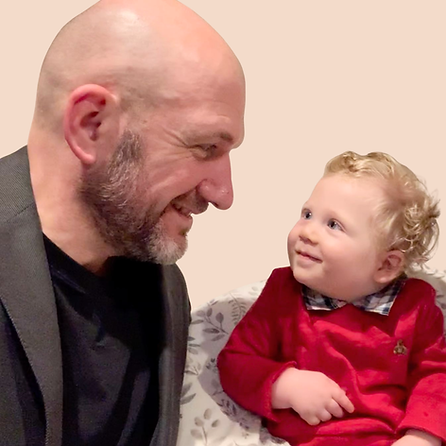
"As a new father, I assumed two decades inside the very industry shaping children's media would help me cut through all the noise. Instead, I found an endless scroll of advice that led to fear, anxiety, and confusion. And when I turned to the experts, I was told to abstain and felt ashamed when that advice did not meet my reality."
Will Maurer, Executive Director, CMRRL
THE SCREEN TIME TRAP
Nearly all global health organizations advise: 'No Screens Before 2.'
While we agree that screens should be avoided for as long as possible, we cannot ignore the facts:
4 months
Average age screen time typically begins
~1 hour
Daily viewing time by 6 months of age
75%+
Watching television before their first birthday
90%+
Watching television before age two
The concern:
– This is happening long before developing brains can process what they’re seeing.
– 80% of brain development occurs in the first three years.
– Experiences during this period shape the foundation for all future learning, behavior, and health.
– Parents feel confused, anxious, and at a disadvantage when their reality doesn't meet the guidelines.
- "No Screens" guidelines have created a market, safety, literacy, and regulatory void that commercial companies have rushed to fill.
This is not a parenting failure.
This is a systemic failure.
Children's media is increasingly being engineered to capture and hold attention by overloading the cognitive and sensory pathways. This creates a level of dependency that is difficult to break.
Parents and pediatricians rarely have the digital literacy training to recognize these overstimulating design elements, much less the tools to care for a child who has become dysregulated and dependent on them.
Closing the screen time literacy gap to help families avoid the screen time trap.
CMRRL has identified a critical gap in research, funding, and trusted public media options for children under 2.
Reform Starts Here
Current screen time policies are not only ineffective, they have created a knowledge, research, regulatory, and funding gap, while blocking support for Developmentally Designed solutions.
This has enabled commercial media and ed-tech companies to fill this void with capture-driven programming and deceptive marketing claims, without any accountability or guardrails to protect unsuspecting families. This is creating immeasurable downstream consequences.
But there is a path forward.
CMRRL IS CLOSING THIS GAP THROUGH THREE CORE OBJECTIVES
Pioneering Research
Conducting pilot studies and developmental analysis to quantify how digital design impacts cognitive load and sensory processing. Our work aims to move the conversation from theory to evidence.
Screen Time Literacy
Translating developmental science and industry expertise into evidence-based tools for parents, educators, and practitioners to ensure their digital literacy meets the same standards as every other aspect of parenting.
Media Reform
Utilizing novel research and industry expertise to create developmentally aligned non-commercial programming that is designed to prioritize attuned relational co-viewing and human connection and interaction.
CMRRL PROGRAMS
SCREEN TIME INGREDIENTS
A structured coding vocabulary that identifies and classifies every single story, design, production, and sensory feature of an episode. Every ingredient is defined so its presence can be detected, counted, and systematically analyzed for academic research and industry assessment.
SCREEN TIME QUALITY INDEX (STQI)
The STQI is the framework's measurement system, converting the screen time ingredients into a reproducible record. The STQI reports counts and figures, not grades.
SCREEN TIME NUTRITION LABEL
A standardized disclosure format that translates STQI output into a clear, public-facing summary, reported per episode. Much like a food nutrition label, it empowers parents, as well as regulators and platforms, to make informed, data-based decisions about children's media.
EARLY YEARS MEDIA (EYM)
Parents have expressed a critical need for non-commercial media options for children ages 5 and under. EYM provides Developmentally Designed programming, as well as attuned relational co-viewing and co-learning resources for their caregivers. EYM is free from advertising, algorithms, auto-play, investor interests, and production techniques that are beyond what a child can experience in their real world.